






Case Study · Delivered Project
Nasser Al-Adhali Law Firm — Internal Operations Platform
A completed responsive operations platform for Nasser Al-Adhali Law Firm, connecting request intake, assignment ownership, quality review, collection follow-up, collaboration, and management reporting.
Services provided: Internal web application, request and assignment workflows, role-based dashboards, review and financial closure controls, collaboration, and reporting
The challenge
Nasser Al-Adhali Law Firm needed a unified operational record for requests arriving through telephone, email, WhatsApp, and office visits. The challenge was to connect intake, responsible ownership, due dates, work execution, reviewer decisions, client updates, and financial follow-up without relying on disconnected conversations and manual tracking.
The completed solution
B-IT completed an internal web-based operating platform for the firm. A central request inbox feeds assignment management, with roles for reception, attorneys, consultants, legal leadership, finance, and administration. The responsive workspace is accessible from desktop, tablet, and mobile browsers.
Work records connect ownership and status history with attachments, discussions, quality review, client communication records, and collection status. Management dashboards bring together workload, performance, overdue work, pending reviews, and receivables for operational follow-up.
From request to controlled closure
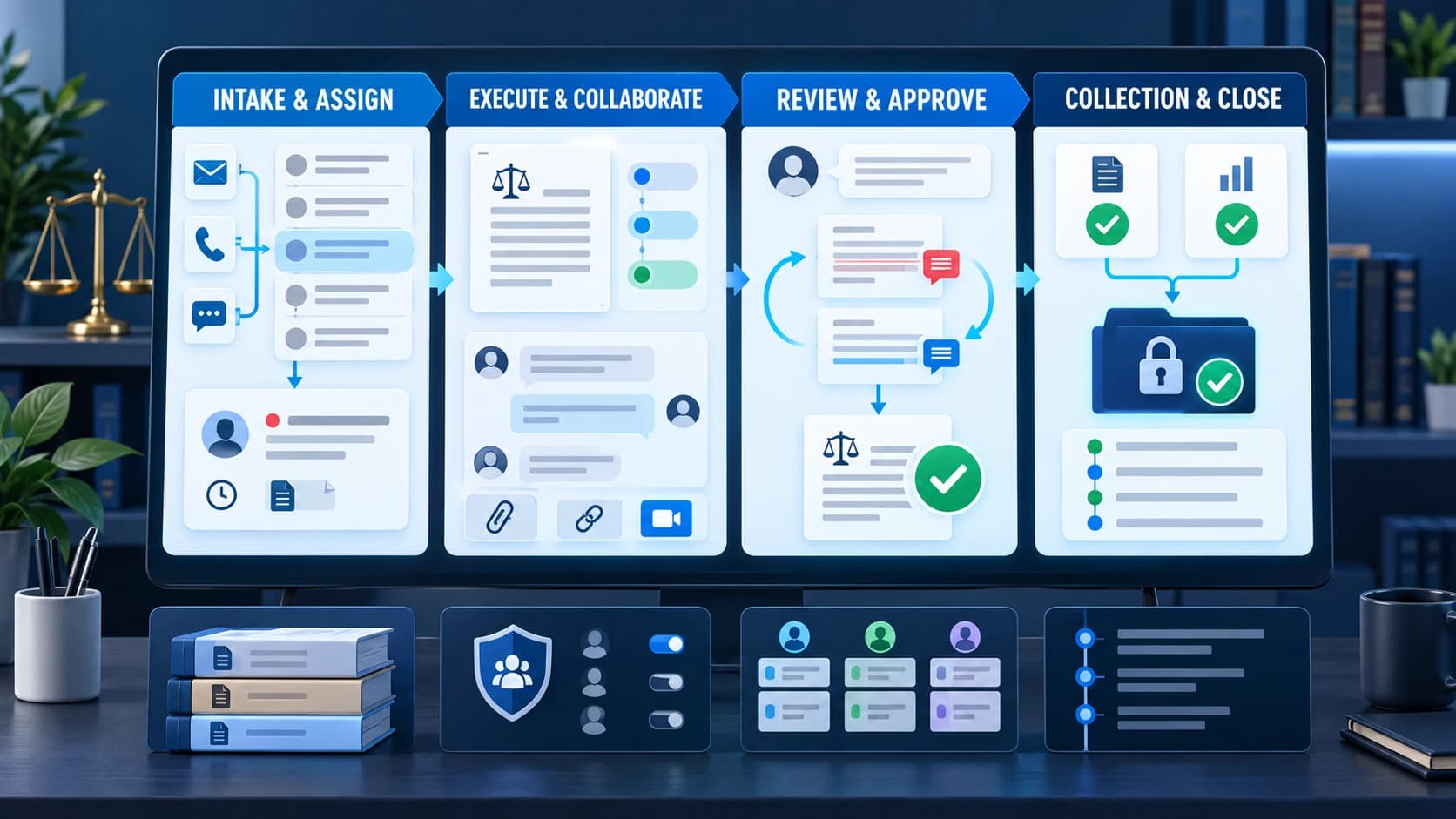
The platform links the legal team's work to review and collection checkpoints, retaining a traceable record throughout the assignment lifecycle.
- Reception registers the request with its source, summary, client reference, priority, attachments, and receiving employee.
- An authorized user creates or converts an assignment, names the responsible owner, and sets its priority and due date. Acknowledgements and reassignments remain part of the history.
- The assigned team executes the work, records progress and client updates, shares documents, and collaborates in assignment-linked discussions.
- An authorized reviewer approves the submission or returns it for correction with notes. Review decisions and resubmission cycles are retained.
- Finance follows the internal pricing, invoiced, and collection statuses. Review approval and collection completion, or an approved written no-fee justification, govern formal closure of billable assignments.
- Management follows pending reviews, overdue assignments, workload, and collection exceptions through dashboards, alerts, reports, and the activity history.
Key capabilities
The completed platform brings operational control and team collaboration into one internal workspace.
- Central intake: registered request IDs and timestamps, source tracking, responsible ownership, priorities, attachments, search, and filtering.
- Assignment lifecycle: owners, deadlines, categories, status changes, acknowledgement, transfer history, overdue visibility, and recorded client updates.
- Quality review: approval, rejection, correction notes, resubmission history, pending-review visibility, and review checkpoints before closure.
- Collection governance: internal financial statuses, receivables and collection records, due-date reminders, exception views, and approved no-fee reasons linked to assignments.
- Team collaboration: assignment-specific chat, comments, file sharing, attachment history, and meeting-link records within the task context.
- Workload and performance: active-task distribution, capacity indicators, authorized reassignment, employee and departmental scorecards, and date-filtered performance views.
- Knowledge and access controls: searchable legal templates, procedures and policies, classified documents, role-based access, and recorded operational actions.
- Management visibility: configurable reminders and escalation thresholds, overdue/review/collection dashboards, operational reports, and PDF/Excel exports.
Scope and integration boundaries
This is an internal operations platform, not a full litigation or court case-management system. Court hearings, pleadings and judgment management, judicial/government integrations, native mobile apps, accounting/ERP replacement, tax invoicing, and online payment gateways are outside the core scope.
Request source registration does not by itself imply automated WhatsApp ingestion. WhatsApp provider integration, external meeting-platform connections, and email delivery depend on the approved operational environment and configured services. Software workflows and audit records support operational discipline; they are not a claim of external certification or a guarantee of legal compliance.
Operational value
The firm now has a connected workspace for who owns an assignment, what is due, what needs review, and what requires collection follow-up. Staff can keep work, documents, and discussion in context, while management can follow exceptions and make workload decisions from shared records.
Linking intake, execution, review, and collection gives each assignment a coherent operational history. The knowledge repository and reporting views support repeatable work and informed follow-up across legal, reception, finance, and management roles.