






Case Study · Delivered Project
Smart Coordinator – AI-Assisted Healthcare Coordination
A delivered multi-clinic SaaS platform connecting AI-assisted patient conversations, human handoff, appointments, and follow-up in one operational workspace.
Services provided: Multi-tenant SaaS development, AI-assisted chat, and healthcare workflow management
The challenge
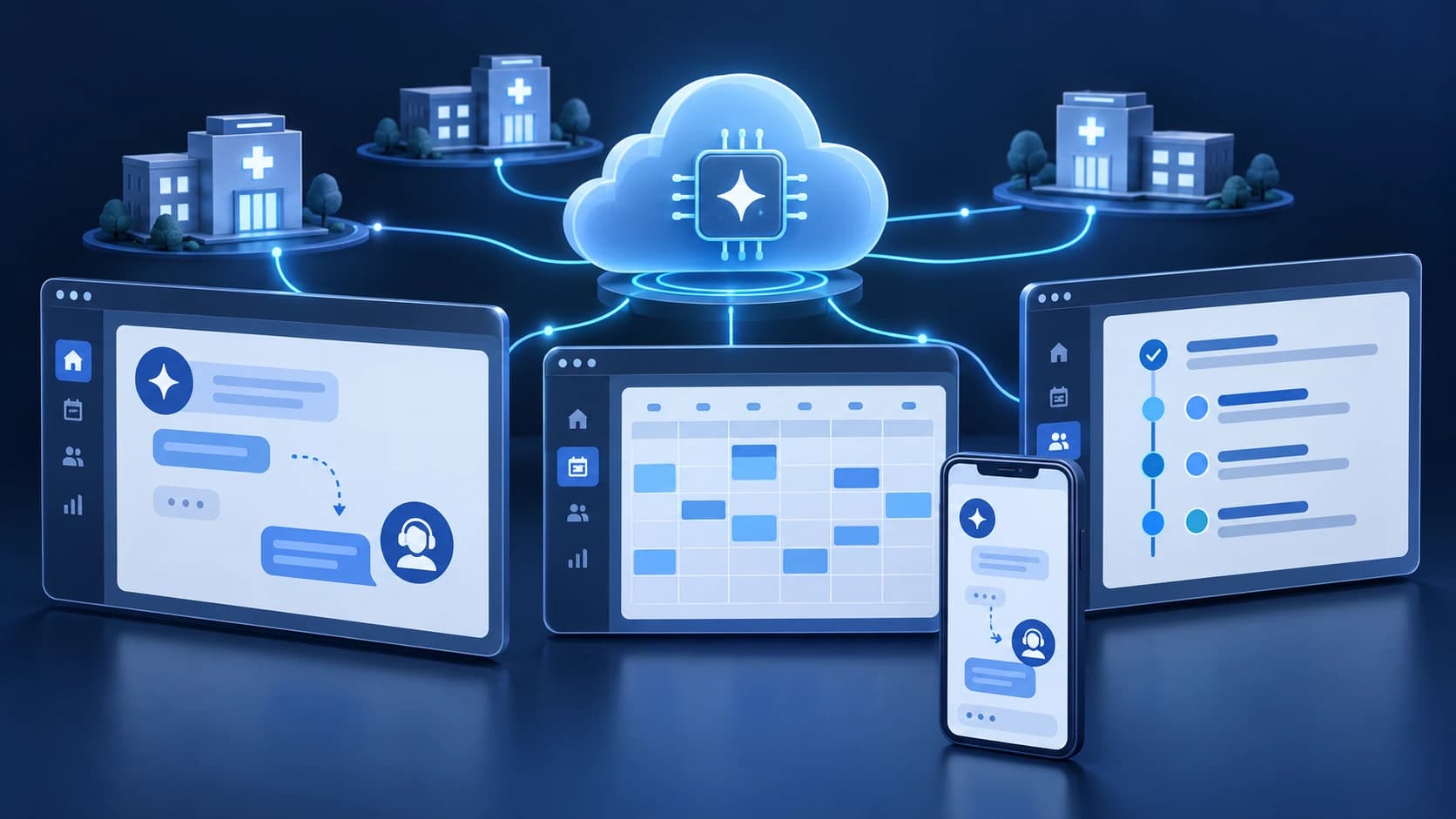
Patient coordination involves more than answering a message. Teams need to connect inquiries, doctor availability, bookings, follow-up, and complaints while keeping each clinic’s information separate. Fragmented communication and disconnected records make it harder to see who owns the next action and what has already happened.
The delivered solution
B-IT delivered Smart Coordinator as a cloud-based, multi-tenant healthcare coordination platform. It brings together a central platform administration environment, independent clinic workspaces, coordinator and doctor views, and a patient portal, with Arabic and English interfaces and role-based access.
AI assists with initial text conversations, service information, booking support, and suggested replies. Coordinators or doctors can take over the same conversation; automated replies pause during human handling and can resume afterwards. This is operational assistance, not a medical diagnosis system; clinical decisions remain with qualified healthcare professionals.
How the system works
The platform connects the patient’s request to the responsible team and keeps the conversation, appointment, and follow-up history together within the clinic’s environment.
- Set up each clinic’s environment, staff roles, doctor availability, and coordination settings.
- Register patients with mobile verification and capture their requests as tracked inquiries.
- Start an AI-assisted text conversation and hand it to a coordinator or doctor when human support is needed.
- Book, reschedule, or cancel appointments against doctor availability, and send confirmations and reminders.
- Track aftercare, follow-up, and complaints, then review activity and operational reports in the appropriate dashboard.
Key capabilities
- Multi-clinic administration: separate tenant data and settings, account activation or suspension, staff permissions, and audit/activity logs.
- Patient access: mobile OTP verification, profiles, a self-service portal, request status, notifications, and conversation history.
- Hybrid conversations: real-time text chat, AI-assisted initial responses and reply suggestions, conversation history, and coordinator/doctor takeover with AI pause and resume.
- Appointments: doctor schedules and available slots, booking, rescheduling, cancellation, status tracking, no-show tracking, and reminders.
- Operational CRM: inquiry classification, service-interest groups, priorities, assignment, follow-up queues, coordinator notes, and inquiry-to-booking tracking—not an enterprise sales or marketing-automation suite.
- Patient timeline and aftercare: linked inquiry, chat, appointment, complaint, and follow-up records; aftercare templates and notes; procedure lifecycle tracking and renewal reminders based on clinician-entered estimates.
- Complaints and notifications: complaint registration, escalation, resolution tracking, SMS verification and appointment reminders, and in-platform operational and follow-up alerts.
- Role-specific dashboards: central platform oversight, clinic operations, coordinator queues, doctor schedules, and patient views, with activity indicators and operational reporting. Doctor mobile access is through a responsive web browser, not a native app.
Operational value
The delivered platform gives clinic teams a shared view of each patient’s coordination journey and a clear place to manage the next action. Linking conversations, appointments, and follow-up supports continuity between AI, coordinators, and doctors, while tenant separation and role-specific views support controlled multi-clinic operations.